

The plastic pallet supplier built around real warehouse specs
Rackable Pallets is the plastic pallet supplier manufacturers, 3PLs, and cold-chain operators call when the spec sheet matters more than the unit price. Heavy-duty HDPE pallets, bulk containers, and crates — engineered to the application, not to the catalog.
What makes us a different kind of plastic pallet supplier
Most plastic pallet supplier catalogs list every SKU and let the buyer guess which one fits. That approach kills margin — the wrong pallet gets sold into rack storage and cracks within a year, the wrong bulk container gets sold into a closed-loop program and fills return trucks with empties, the wrong crate specification fails FM-approved sprinkler compliance and bumps the insurance rate.
Rackable Pallets was founded on the opposite principle. We are a plastic pallet supplier that collects customer specs first — unit load, rack beam span, cycle count, operating temperature, washdown chemistry — and recommends products second. In fifteen-plus years of HDPE pallet field work, that order of operations has turned out to be the difference between a happy customer and a three-year buying cycle.
Why supply chains choose our plastic pallet supplier model
Specs, then products
Every spec conversation starts with load, rack, and environment data. Product recommendations are the output of that conversation, not the input.
Four regional yards
Dallas, Atlanta, Los Angeles, and Newark. As a multi-regional plastic pallet supplier, we ship from the yard closest to your DC to cut transit cost and lead time.
Full closed-loop programs
We recover, wash, inspect, grade, and rotate used pallets back into your stock. A plastic pallet supplier that takes its product back is a smaller club than it should be.
Sustainability on the spec sheet
100% recyclable HDPE. Retired units feed directly into our recycling stream for reprocessing into new plastic pallets — nothing we supply reaches landfill.
Pallets are infrastructure — not a line-item commodity
A broken pallet in a selective rack is not a disposable expense. It is a dropped load, a damaged product, and an OSHA recordable waiting to happen. An empty gaylord tied up in return freight is not a logistics annoyance — it is a recurring cost on a P&L line nobody reads carefully.
The industries we serve do not treat their racking, their forklifts, or their warehouse floor as commodities. As a plastic pallet supplier, we extend that same rigor to the products we sell. Every pallet, bulk container, and crate in our catalog is specified to an application, warrantied by our technical team, and recovered at end of service life.
That posture costs us a certain kind of sale — the lowest-unit-price buyer who wants a catalog SKU and a freight quote. It wins us the buyer who measures pallet programs in total cost of ownership over a 10-year horizon. On a long enough timeline, those are the only customers who stay.
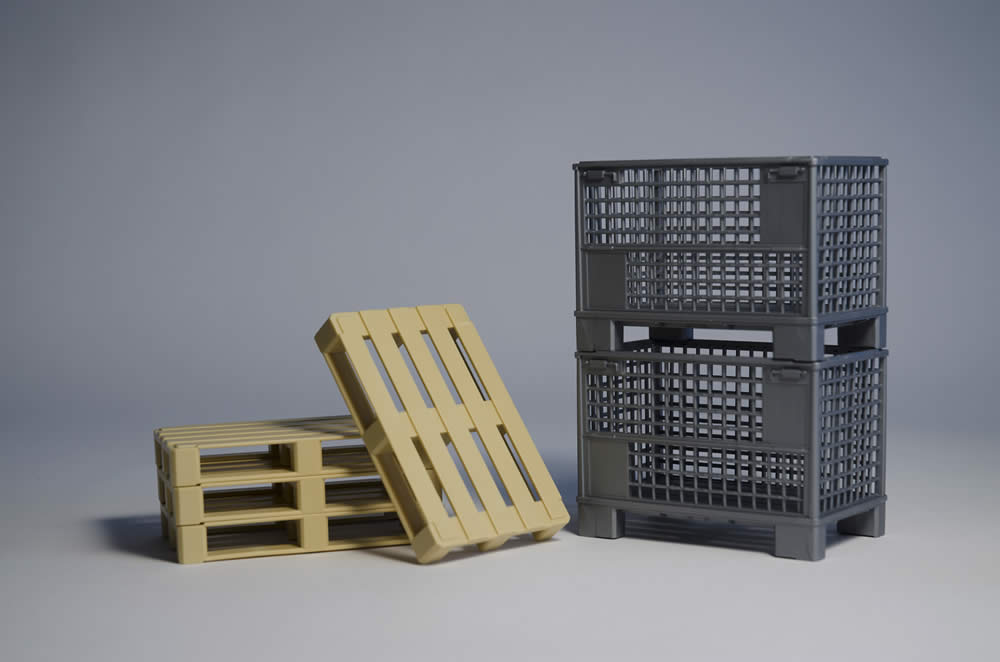
Fifteen years of field data — distilled into every recommendation
Our technical team has specified, shipped, and recovered more than two million plastic pallets across North American industrial supply chains since 2010. That field data — which deck configurations hold up in drive-in rack, how nestable pallets fatigue after 500 cycles, which reinforcement patterns survive battery-acid spills — drives every recommendation this plastic pallet supplier puts on a spec sheet.
We have walked the floors of food processors in Wisconsin, pharma plants in New Jersey, beverage distributors in Texas, automotive OEMs in Michigan, and cold-chain 3PLs from Jacksonville to Portland. That variety means we can credibly answer questions about FDA 21 CFR 177.1520 compliance, FM-4996 sprinkler-system pallet approval, ISPM-15 export exemption, and USDA washdown-compatible rackable pallet designs — with specifics, not marketing.
If you are evaluating a new plastic pallet supplier for a closed-loop program, a rack-retrofit project, or a one-way export run, the deliverable from our first conversation is a spec sheet grounded in your operating reality. We would rather recommend three wrong products and correct ourselves than recommend the perfect product for an application we did not understand.
Ready to talk specifications?
We do not quote on unit price alone. Send us your unit load, rack system, cycle count, and washdown chemistry — we will return a spec sheet grounded in your real operating data within one business day.